Planning your first trip to Thailand in 2026 means stepping into one of the most rewarding travel experiences Southeast Asia has to offer. This Thailand travel guide 2026 is built for travelers who want a honest, practical overview before booking flights, choosing hotels, and mapping out an itinerary that actually works.
Thailand is not a destination you can reduce to a single idea. It is beaches and temples, street food and rooftop bars, jungle treks and island sunsets, ancient heritage and modern city energy — all layered into a country that somehow makes every style of travel feel effortless. That combination is exactly what keeps visitors coming back year after year.
Whether you are traveling solo, with a partner, or with family, Thailand adapts to your rhythm. The infrastructure is solid, the hospitality is genuine, and the variety of experiences on offer is genuinely hard to match anywhere else in the region.
Why Thailand Stands Out in 2026
Thailand enters 2026 with strong momentum as a travel destination. The tourism sector has invested heavily in visitor experience, new attractions have opened across multiple regions, and the country continues to refine the balance between modern comfort and authentic cultural access that makes it so appealing to international travelers.
What makes Thailand different from other Southeast Asian destinations is the density of experiences available within a manageable geography. You can wake up to a temple at sunrise, spend an afternoon on a white sand beach, and end the evening at a night market — all without exhausting yourself or needing to travel far.
For first-time visitors, that accessibility matters. Thailand does not punish you for being new to the region. It welcomes you in a way that feels genuinely warm, and rewards those who slow down and engage with it beyond the surface level.
The Best Time to Visit Thailand
Thailand is a year-round destination, but the timing of your trip can significantly shape the kind of holiday you have. The country's tropical climate divides broadly into three seasonal windows, each with a different character.
The cool and dry season from November through February is the most popular period for international travelers. Temperatures are comfortable, skies are clear, and both the northern highlands and southern islands are at their best. Expect higher hotel prices and a more active tourism atmosphere during this window.
The hot season from March through May brings intense heat but also some of the country's most vibrant cultural events, including Songkran — the Thai New Year water festival — in April. If you enjoy festive energy and do not mind the heat, this period has its own appeal.
The rainy season from June through October brings lower prices, lush green landscapes, and a quieter atmosphere at most destinations. Rainfall is often concentrated into afternoon showers rather than full days of bad weather, and many experienced Thailand travelers consider this their preferred time to visit for exactly that reason.
How Long Should You Stay
For a first visit, ten to fourteen days gives you the space to experience more than one side of Thailand without feeling rushed. Shorter trips work better when focused on a single region — Bangkok and the central area, or one island destination.
The key mistake first-time visitors make is packing too much into a single itinerary. Thailand is better absorbed slowly. A well-chosen set of two or three bases will give you more than a rushed circuit of six or seven stops ever could.
Leave room in your schedule for the kind of unplanned moments that define a great trip — a long lunch that turns into an afternoon, a boat ride that leads somewhere unexpected, or a market that pulls you in for two hours when you only planned for twenty minutes.
Where to Base Yourself
Thailand's geography divides naturally into four main travel zones, and choosing the right combination of bases is one of the most important planning decisions you will make.
Bangkok is the entry point for most visitors and one of Asia's most compelling cities in its own right. It combines royal heritage, world-class food, river culture, and a nightlife and shopping scene that few cities anywhere can match. Spend at least two to three full days here — not as a stopover, but as a destination.
Chiang Mai in the north offers a completely different pace. The old walled city, the surrounding mountains, the elephant sanctuaries, the cooking schools, and the cooler temperatures make it an ideal second base for first-time visitors who want cultural depth alongside their beach time.
The Gulf of Thailand islands — Koh Samui, Koh Phangan, and Koh Tao — are known for warm, calm waters, lively beach scenes, and excellent diving and snorkeling conditions. Koh Tao in particular has built a global reputation for accessible dive courses.
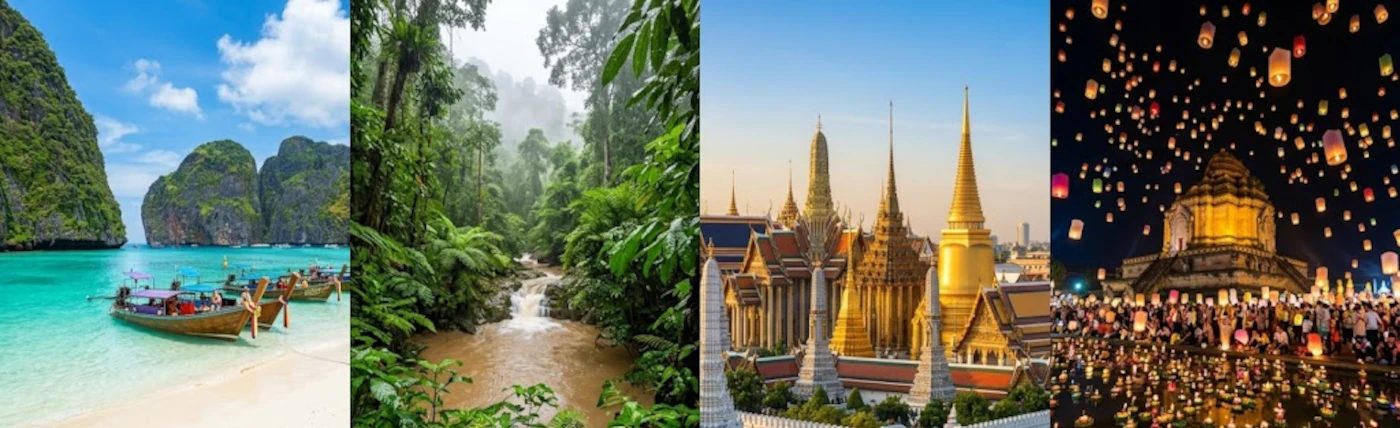
The Andaman Coast — Phuket, Krabi, Koh Lanta, and the Phi Phi islands — offers dramatic limestone karst scenery, emerald water, and some of the most photographed coastlines in the world. The visual contrast between the Gulf and the Andaman is real, and many visitors who have been to both develop a strong preference for one or the other.
Entry Requirements and the Thailand Digital Arrival Card
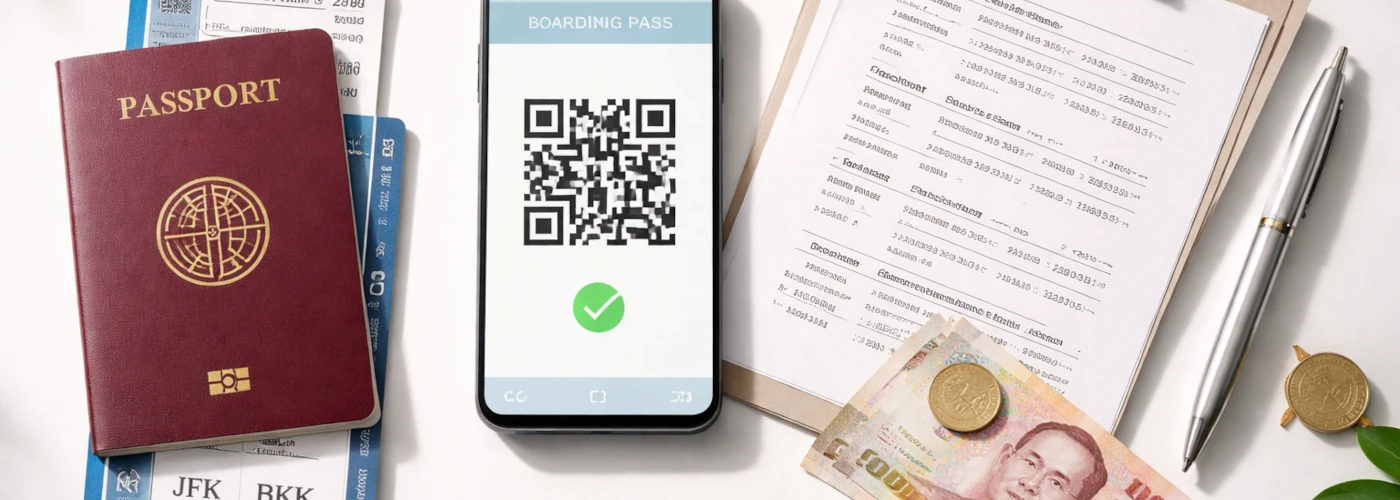
Before you fly, there is one essential step that every visitor to Thailand must complete: the Thailand Digital Arrival Card (TDAC). This is an online form that replaced the former paper arrival card and must be submitted before you arrive in the country.
The TDAC captures your passport details, flight information, accommodation address in Thailand, and contact information. It should be completed within 72 hours before your scheduled arrival. Once submitted, you receive a confirmation by email that immigration will check upon entry.
The process is fully online and takes only a few minutes. If you are planning your trip, you can start your Thailand Digital Arrival Card application here — your confirmation is sent to your email as soon as your submission is processed, so there is no reason to leave it until the last minute.
Save your confirmation on your phone or print a copy before you travel. Check your spam folder if it does not arrive in your main inbox shortly after submission. Having it ready at immigration makes your arrival faster and completely stress-free.
Bangkok: More Than a Starting Point
Most visitors treat Bangkok as a transit stop between the airport and wherever they are really going. That is a significant missed opportunity. Bangkok is one of the most layered, energetic, and culturally rich cities in Asia, and it deserves proper time on your itinerary.
The historic core of the city — centered around the Grand Palace, Wat Phra Kaew, and the riverside neighborhoods of Rattanakosin — offers some of the most visually impressive temple and palace architecture you will find anywhere in Southeast Asia. These are not tourist backdrops. They are living, active parts of Thai religious and royal culture, and they communicate something about Thailand that a beach cannot.
Beyond the temples, Bangkok rewards the curious traveler. The weekend markets at Chatuchak, the rooftop bars above the Chao Phraya river, the street food lanes of Yaowarat's Chinatown, and the local neighborhoods that most visitors never reach — all of it adds up to a city that deserves at least two full, unhurried days.
Chiang Mai and the North
The north of Thailand feels like a different country compared to Bangkok or the islands. The pace is slower, the landscape is green and mountainous, and the cultural identity is distinct from the rest of the country. Chiang Mai is the natural base for exploring this region, and it has become one of the most beloved destinations in all of Southeast Asia.
The old city, enclosed by its ancient moat and walls, is compact enough to walk in an afternoon but rich enough to occupy several days. Temples are everywhere — Wat Chedi Luang, Wat Phra Singh, and the mountaintop Doi Suthep are among the most memorable. The city's Sunday Walking Street and Nimmanhaemin neighborhood add a more contemporary layer that sits comfortably alongside the historical core.
Outside Chiang Mai, the options expand quickly. Responsible elephant sanctuaries, zip-line courses through jungle canopy, hill tribe villages, night bazaars, and cooking schools make this one of the most activity-rich regions in the country. Plan at least three days here on your first visit, more if the north appeals to you from the start.
The Islands: Gulf Coast vs Andaman
Choosing between the Gulf of Thailand and the Andaman Coast is one of the most common planning questions for first-time visitors, and the honest answer is that both are worth experiencing. If you only have time for one, your choice should come down to what you want most from your beach time.
The Gulf islands — particularly Koh Samui and the areas around it — offer warm, flat water, a social atmosphere, and good access to diving and snorkeling on Koh Tao. The vibe is relaxed but with enough nightlife and dining options to keep things interesting.
The Andaman side — Krabi, Koh Lanta, the Phi Phi islands, and Phuket's quieter beaches — offers some of the most visually dramatic coastal scenery in the world. The limestone cliffs rising from turquoise water are genuinely extraordinary, and island hopping here feels like moving through a series of postcards. If scenery and photography matter to you, the Andaman Coast tends to win.
Phuket deserves a mention on its own terms. It is the largest and most developed island in Thailand, with a range of beaches to suit different moods — from the busy energy of Patong to the quieter, more refined atmosphere of Kata Noi and Surin. It also serves as a hub for day trips to Phang Nga Bay and the surrounding islands, making it a smart operational base for a few days of Andaman exploration.
Food: One of the Real Reasons to Visit
Thai cuisine is not just a highlight of the visit — for many travelers, it becomes the reason they start planning a return trip before they have even left. The food culture here is genuinely world-class, and it is available at every level from street stalls to fine dining restaurants that have earned international recognition.
The dishes most visitors know — pad Thai, green curry, massaman, tom yum, som tum, mango sticky rice — are excellent, but they are also the beginning of a much deeper culinary conversation. Regional dishes vary significantly between the north, the northeast, Bangkok, and the south. A serious food traveler could spend weeks in Thailand simply tracking regional cooking traditions and barely scratch the surface.
Eat at markets. Eat at roadside stalls. Try the local lunch spots that do not have English menus. Follow the queues rather than the tourist signage. Some of the most memorable meals in Thailand cost almost nothing and are served on plastic chairs at a folding table by the road — and they are extraordinary.
Activities Beyond the Beach
Thailand's identity as a beach destination sometimes overshadows the remarkable range of activities available across the country. First-time visitors who arrive expecting only sun and sand are often surprised by how much else there is to engage with.
Rock climbing in Railay, kayaking through mangrove forests in Krabi, muay thai classes in Bangkok, zip-lining through jungle in Chiang Mai, night markets in every city, temple meditation sessions, Thai massage courses, cooking schools, coffee farm visits in the north, and wildlife encounters at responsible sanctuaries — the activity list is genuinely broad.
Plan at least one or two experiences that take you beyond passive tourism. The best memories from Thailand rarely come from lying on a sun lounger. They come from doing something that put you properly inside the country rather than watching it from a distance.
A Sample 14-Day Itinerary
This framework gives first-time visitors a balanced structure that covers the main highlights without feeling rushed. Adjust it based on your interests and pace.
- Day 1 — Arrive Bangkok: Check in, rest, explore your neighborhood. Street food dinner nearby.
- Day 2 — Bangkok Temples: Grand Palace, Wat Phra Kaew, riverside walk. Lunch at a local market.
- Day 3 — Bangkok Modern: Markets, contemporary neighborhoods, rooftop bar in the evening.
- Day 4 — Fly to Chiang Mai: Old city walk, evening night bazaar.
- Day 5 — Chiang Mai Culture: Doi Suthep, cooking class, street food exploration.
- Day 6 — Chiang Mai Adventure: Elephant sanctuary or jungle trek outside the city.
- Day 7 — Fly South: Travel to your island base. Settle in, beach walk, early night.
- Day 8 — Beach Day: Pick one beach, swim, read, seafood dinner by the coast.
- Day 9 — Island Hopping: Boat tour to nearby islands, snorkeling, hidden bays.
- Day 10 — Water Activity: Dive introduction, kayak tour, or rock climbing session.
- Day 11 — Quiet Beach: Find a less-visited stretch of coastline. Slow morning, long lunch.
- Day 12 — Market and Local Life: Night market or floating market, local dishes, easy afternoon.
- Day 13 — Free Day: Back to your favorite spot. No agenda. Full flexibility.
- Day 14 — Depart: Travel to departure airport. Thailand will already be on your mind for next time.
Practical Tips Before You Go
- Pack light: Thailand's heat, laundry access, and shopping opportunities make overpacking one of the most common regrets. A carry-on and a daypack is often enough.
- Download Grab: The ride-hailing app works across Thailand's major cities and islands and takes the guesswork out of short-distance transport.
- Carry some local currency: Markets, street food stalls, tuk-tuks, and small temples often work on cash. ATMs are widely available but exchange rates vary.
- Dress for temples: Shoulders and knees should be covered when entering temples. A light scarf or sarong takes up no space and solves the problem everywhere.
- Confirm your TDAC before departure: Complete your Thailand Digital Arrival Card within 72 hours of your flight and save the confirmation to your phone before you leave home.
- Book accommodation in advance for peak season: November through February fills quickly at well-located properties. Locking in your first two nights before you fly removes unnecessary stress on arrival.
Thailand in 2026 Is Ready for You
This Thailand travel guide 2026 is designed to give you enough clarity to plan with confidence and enough flexibility to let the country surprise you once you arrive. The balance between those two things is exactly what makes Thailand one of the most satisfying destinations a traveler can choose.
The temples, the food, the water, the people, the energy of Bangkok, the stillness of a northern mountain morning, the feeling of a longtail boat cutting through an emerald bay — none of it is overhyped. Thailand earns every word written about it, and it will earn your return visit before your first trip is even over.
Get the planning right, complete your arrival requirements in advance, and leave room for the moments you did not plan. That is the formula for a Thailand trip that stays with you long after you land back home.