If you are traveling to Thailand for the first time, understanding the Thailand airport experience for tourists will make your arrival and departure far smoother than if you arrive unprepared. Thai airports handle millions of international visitors every year, and knowing what to expect at each stage of the process — from landing to leaving the terminal — means you can move through with confidence and without unnecessary stress.
This guide is written for tourists who want a clear, practical overview of what happens at Thailand's major international airports, how immigration and customs work, what facilities are available inside the terminals, and how to get from the airport to your destination quickly and safely. Whether you are landing at Suvarnabhumi for the first time or returning through Phuket after a week on the islands, the same principles apply.
Your Thailand trip begins the moment your plane lands. Understanding the airport process means that first impression is a positive one — organized, efficient, and the beginning of an experience you have been looking forward to for months.
Thailand's Major International Airports
Thailand has several international airports that serve tourists arriving from destinations around the world. Each one has its own character, size, and connection to the surrounding region. Knowing which airport you are arriving at — and what to expect there — is the first step in preparing for a smooth arrival.
- Suvarnabhumi Airport (Bangkok): Thailand's largest and busiest international airport, located approximately 30 kilometers east of central Bangkok. This is the main gateway for most international visitors to Thailand and handles the majority of long-haul international flights into the country. It is large, modern, and well-signposted throughout.
- Don Mueang Airport (Bangkok): Bangkok's second airport, primarily serving low-cost carriers and regional routes. Located approximately 24 kilometers north of the city center, it is older and smaller than Suvarnabhumi but still a major hub for budget travelers and domestic connections.
- Phuket International Airport: The main gateway to Thailand's most famous island and the Andaman Coast. It handles a large volume of international charter and scheduled flights, particularly during peak season from November through April.
- Chiang Mai International Airport: The primary airport for northern Thailand, serving both domestic and international routes. Compact and easy to navigate, it is one of the most straightforward airport experiences in the country and rarely overwhelms first-time visitors.
- Koh Samui Airport: A privately operated airport serving the Gulf of Thailand island of Koh Samui. Smaller and more boutique in character than the mainland airports, with a relaxed tropical atmosphere that sets the tone for island life immediately upon landing.
Before You Land: What to Have Ready
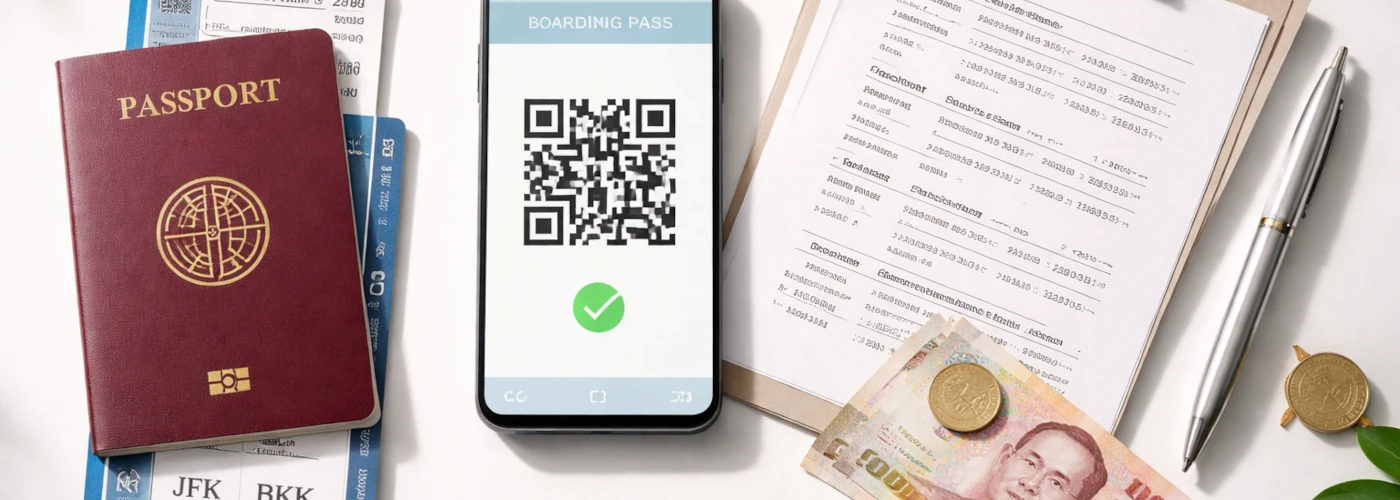
A smooth Thailand airport experience for tourists starts before your plane touches down. Having the right documents organized and accessible when you land means you move through each stage of the arrival process without delays or the frustration of searching through your bag at the immigration desk while a queue forms behind you.
Before your flight lands, make sure you have the following ready and easily accessible.
- Your valid passport: Open to the photo page and ready to present. Your passport must be valid for the full duration of your stay in Thailand, and officers will check this at the immigration desk.
- Your Thailand Arrival Card confirmation: This must be completed online before you travel and saved on your phone or printed. Have it ready before you reach the immigration desk — arriving without it will slow your entry process significantly.
- Your visa documentation: If your nationality requires a visa to enter Thailand, have it ready along with your passport. If you are eligible for a visa on arrival, be prepared to join the visa on arrival queue before reaching the main immigration counters.
- Your accommodation details: The name and address of your first night accommodation. Immigration officers may ask for this during the entry process, and having it on your phone or written down avoids any unnecessary delay.
- Your return or onward flight booking: A printed or digital copy of your outbound travel plans, which may be requested at immigration as evidence of your intention to depart Thailand within your permitted stay.
If you have not yet completed your Thailand Arrival Card, you can start the application here — it takes only a few minutes and your confirmation arrives by email as soon as your submission is processed.
Arriving at Suvarnabhumi: Step by Step
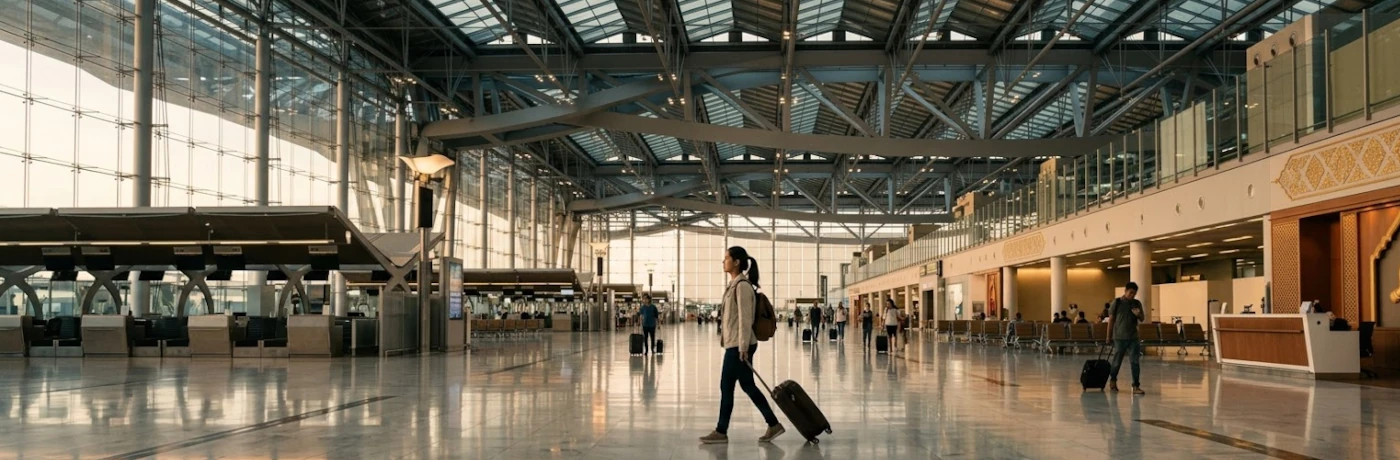
Suvarnabhumi is where the majority of tourists first experience Thailand, so understanding exactly how arrival works at this airport is valuable preparation for most international visitors. The process is well-organized and clearly signposted, but knowing the steps in advance means you never feel lost or uncertain at any point.
- Disembark and follow signs to immigration: After landing, follow the signs for arrivals and immigration. Suvarnabhumi is a large airport — the walk from the gate to immigration can take ten to fifteen minutes. Follow the overhead signs and stay in the flow of arriving passengers.
- Passport control: Join the appropriate immigration queue — tourist visa, visa on arrival, or the lane matching your entry type. Have your passport, arrival card confirmation, and visa documentation ready before you reach the desk. Officers are professional and efficient when travelers arrive prepared.
- Biometric registration: At the immigration desk, you will be asked to provide fingerprint scans and a photograph as part of the standard entry process. This applies to all arriving international passengers and takes only a moment.
- Baggage claim: After clearing immigration, follow the signs to baggage claim. Check the screens for your flight number and the designated carousel. Allow time for luggage to arrive — busy international flights can take twenty to thirty minutes for bags to appear on the belt.
- Customs clearance: After collecting your bags, proceed through customs. Most tourists with standard luggage pass through the green channel without issue. If you are carrying items that require declaration, use the red channel and have your documentation ready.
- Exit to arrivals hall: Once through customs, you enter the public arrivals hall where transport options, taxi desks, currency exchange, SIM card vendors, and hotel transfer services are all immediately available.
Immigration: What to Expect
Immigration at Thai airports is generally efficient and well-organized, but it can move slowly during peak arrival windows when multiple large international flights land within a short period of each other. Being prepared helps you move through the process faster and with far less frustration than travelers who arrive without their documents in order.
Officers at the immigration desk will check your passport, verify your arrival card confirmation, review your visa status, take your biometric data, and may ask basic questions about your visit — how long you are staying, where you are going, and where you are staying on your first night. Answer clearly and confidently. These are routine checks that apply to every arriving passenger and are nothing to be concerned about.
If you are asked for your return flight details or accommodation information and you do not have them easily accessible, it can slow your entry process and cause unnecessary anxiety at the desk. Having everything organized before you reach immigration is always the right approach and the easiest way to keep things moving.
⏰ Important: Do not use your phone or take photographs while in the immigration queue or at the immigration desk. This is not permitted and can attract unnecessary attention from airport security officers.
Customs at Thai Airports
After collecting your luggage, you will proceed through Thai customs. The process follows the standard international system used at airports around the world and is straightforward for the vast majority of tourists arriving with standard holiday luggage.
The green channel is for passengers with nothing to declare — standard luggage, personal belongings, and items within the duty-free allowance. The red channel is for passengers carrying goods that must be declared, including large amounts of currency, commercial goods, or items that exceed duty-free limits. Use the channel that correctly reflects what you are carrying.
Thailand has specific rules about what can and cannot be brought into the country. Be aware of restricted items before you travel — certain medications, food products, and other goods are subject to restrictions or require declaration on arrival. Checking these rules before you pack avoids complications at the customs stage.
Airport Facilities for Tourists
Thailand's major international airports — particularly Suvarnabhumi — offer an extensive range of facilities for arriving and departing tourists. Knowing what is available in the arrivals area means you can take care of practical needs quickly and efficiently before heading to your destination, rather than hunting around the terminal looking for services you did not know were there.
- Currency exchange: Multiple currency exchange counters are available in the arrivals hall. Rates at the airport are generally reasonable, though you may find slightly better rates at exchange booths in the city. Change enough for your first day and take care of the rest once you are settled at your accommodation.
- SIM cards: Thai SIM cards with data packages are available from major network operators immediately after customs. Purchasing a local SIM at the airport is one of the smartest first moves any tourist can make — it gives you maps, translation, and communication capability from the moment you leave the terminal building.
- ATMs: Multiple ATMs are available in the arrivals area. Be aware that Thai ATMs charge a flat fee per transaction for foreign cards, so withdrawing a larger amount in a single transaction is more cost-effective than making multiple smaller withdrawals over the course of your trip.
- Tourist information: Information desks in the arrivals hall can provide maps, transport guidance, and basic visitor information for tourists arriving in Thailand for the first time and unsure of their next steps.
- Food and beverages: Cafes, restaurants, and convenience stores are available throughout the terminal for travelers who need to eat or drink after a long flight before heading onward to their destination.
- Hotel transfer desks: Many hotels and resorts operate transfer desks in the arrivals hall. If you have pre-arranged a hotel pickup, check the board or designated meeting area for your driver upon exiting customs.
Getting from the Airport to Your Destination
Once you have cleared immigration, collected your bags, and passed through customs, the next step is getting from the airport to wherever you are staying. Thailand's major airports offer several reliable transport options for tourists, ranging from public rail links to private transfers depending on your destination and preference.
- Airport Rail Link (Suvarnabhumi): The fastest and most affordable way to reach central Bangkok from Suvarnabhumi. The express train connects the airport to Phaya Thai station in approximately 30 minutes, where you can connect to the BTS Skytrain network for onward travel across the city.
- Official airport taxis: Metered taxis are available from the official taxi queue on the arrivals level. Always use the official queue — never accept offers from drivers who approach you inside the terminal. Ensure the driver uses the meter and be aware that airport expressway tolls are paid by the passenger on top of the fare.
- Ride-hailing apps: Grab is widely used across Thailand and operates at major airports. Pickup points are designated and clearly signposted. Using an app gives you a confirmed price before you get in the vehicle, which many tourists find reassuring when arriving in an unfamiliar country for the first time.
- Pre-arranged hotel transfers: Many hotels and resorts offer airport transfer services that can be booked in advance. This is often the most convenient option for first-time visitors — your driver meets you in arrivals and takes you directly to your accommodation without any navigation or negotiation required.
- Shared minibus services: Available at Phuket and Chiang Mai airports for travelers heading to popular tourist areas. More affordable than a private taxi but slower due to multiple stops along the route before reaching your destination.
Departing Thailand: The Airport Experience on the Way Out
The departure experience at Thai airports is generally smooth and well-organized, but it requires the same level of preparation as arrival. Allow plenty of time — particularly at Suvarnabhumi during peak season when check-in queues and security can move slowly — and approach your departure with the same organized mindset as your arrival.
- Arrive early: Suvarnabhumi recommends arriving at least three hours before an international flight during peak periods. Don Mueang and Phuket are generally faster to move through, but two to two-and-a-half hours is still the safe minimum at any Thai international airport.
- Check in and drop bags: Check-in desks are on the departure level. Online check-in is available for most airlines and significantly speeds up the process at the airport. Use it when possible to reduce your time at the desk.
- VAT refund: If you have purchased goods at shops displaying the VAT refund logo, you can claim a refund on the value added tax at the VAT refund counters before passing through immigration. Have your receipts and purchased goods accessible and allow extra time for this step.
- Immigration and security: Pass through departure immigration and security screening. Remove electronics and liquids from your bag before reaching the security belt to keep the process moving quickly and avoid holding up the queue.
- Departure lounges and shopping: Suvarnabhumi's departure area is extensive, with duty-free shopping, restaurants, cafes, and airline lounges. Allow time to explore if you arrive early, but do not cut your buffer time short to browse the shops.
Tips for a Smooth Thailand Airport Experience
⚠️ Read This Before You Fly
- Complete your Thailand Arrival Card before you travel — do not arrive without it, as this will delay your entry at immigration.
- Never accept transport offers from unofficial drivers inside the terminal — always use the official taxi queue or a ride-hailing app.
- Purchase a local SIM card immediately after customs — it will make every subsequent step of your trip easier and more manageable.
- Use the Airport Rail Link from Suvarnabhumi if you are heading to central Bangkok — it is faster and more reliable than road transport during peak hours.
- Do not photograph immigration desks, officers, or restricted areas inside the airport under any circumstances.
- Allow more time than you think you need for both arrival and departure — Thai airports are busy and queues can be long during peak travel periods.
Final Checklist for Your Thailand Airport Experience
- Complete and save your Thailand Arrival Card confirmation before boarding your flight — it is required at immigration and arriving without it causes delays.
- Organize your passport, visa documentation, and accommodation details before landing so everything is accessible when you need it.
- Plan your transport from the airport to your accommodation in advance so you are not making decisions under pressure in the arrivals hall.
- Purchase a local SIM card at the airport immediately after clearing customs for maps, communication, and ride-hailing access from day one.
- Exchange enough currency for your first day at the airport exchange counters and take care of the rest once you are settled.
- For departure, arrive at least three hours early for international flights during peak season to allow for check-in, VAT refunds, immigration, and security.
- Use online check-in whenever possible to reduce your time at the airport on departure day.
- Keep your arrival card confirmation, passport, and return flight details accessible throughout your trip in case they are requested at any point.
Your Thailand Experience Starts at the Airport
The Thailand airport experience for tourists is one of the first impressions the country makes on every visitor. When you arrive prepared — with the right documents organized, a clear understanding of the process, and a plan for getting to your destination — that first impression is a positive one that sets the tone for everything that follows.
Thailand's airports are busy, modern, and well-equipped for international visitors. Navigate them with preparation and confidence, and they become nothing more than the brief, efficient gateway between your flight and the extraordinary experience that awaits you on the other side.
Get through the airport smoothly, and the rest of Thailand is yours to enjoy.